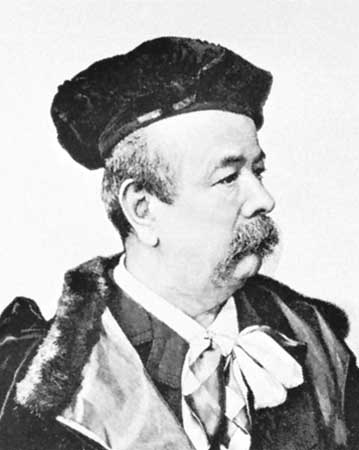
Charles Frederick Worth
The Englishman in Paris who, in 1858, invented the modern couture house: signed labels, seasonal collections, live mannequins, and the designer as author.
Before Charles Frederick Worth, dressmakers were artisans who took orders. After him, they were authors who issued editions. The transformation happened in a single generation, on the rue de la Paix, Paris, from 1858 onward — and the entire apparatus of the subsequent couture industry proceeds from it.
Worth was born in 1825 in Bourne, Lincolnshire, to a solicitor who went bankrupt and absconded when Charles was eleven. He apprenticed to a London draper at twelve and moved to Paris in 1845, at twenty, with five pounds and no French. He worked at Gagelin-Opigez selling silks, and began — without authorisation — making dresses for his future wife Marie. Her wearing them in the shop drew customers.
The Break from Gagelin
In 1858, with the Swedish businessman Otto Bobergh, Worth opened Maison Worth et Bobergh at 7 rue de la Paix. The shop had one decisive innovation: rather than copy patterns at a client's direction, Worth designed the dresses and presented them for selection. The contract of couture — designer proposes, client commissions — dates to that shop. Three further innovations followed within the decade. Worth sewed a signed label into every garment. He organised his designs into seasonal collections, shown in advance of the season. And he presented them on live models — young women called mannequins vivants — walking the salon for the client's inspection. Each is now universal. Each was, in 1860, novel.
I have Delacroix's ambition. I do not want orders. I want a public. — Charles Frederick Worth, 1865
Empress Eugénie
The turning point was 1860, when Princess Pauline von Metternich wore a Worth dress to a ball at the Tuileries. The Empress Eugénie, noticing it, asked where the dress had come from. Within a year, Worth dressed the Empress, her court, and most of the crowned heads of Europe. The house, at its peak, employed twelve hundred seamstresses across the rue de la Paix.
The Argument He Won
What Worth argued, in cloth, was that the author of a dress is the designer, not the patron. The consequence was economic and legal: within a generation, couture was a protected intellectual property, and the maison a brand. He died in 1895 at Suresnes. The Chambre Syndicale de la Haute Couture, which he helped to formalise, remains the gatekeeper of the Paris couture calendar. Every house on that calendar is a professional descendant of the Englishman who sold silks in a Paris draper's shop and ended as the tailor of an empress.
Related Dispatches
The Aesthetic Movement: How Art-for-Art's-Sake Killed the Corset
A loose dress, a sunflower in a buttonhole, an Oscar Wilde quotation. The 1860s rebellion that invented bohemian style and broke the cage crinoline forever.
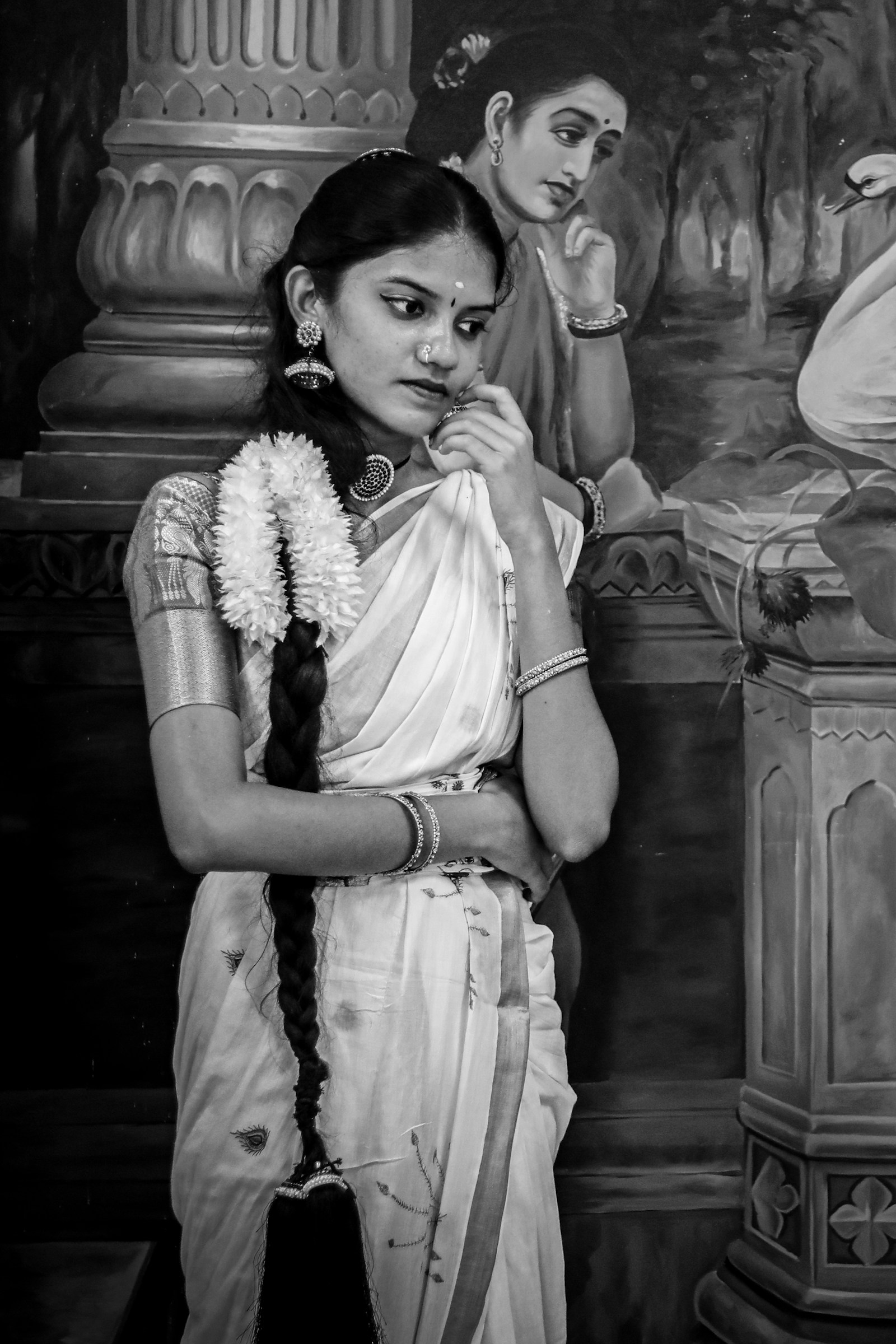
The Sari Across Centuries
Six yards of unstitched cloth, worn continuously on the subcontinent for three millennia. A history of the longest-lived garment in the world.
The Birth of Denim: From Workwear to Wardrobe
A single-indigo twill, first woven for dockworkers in Genoa, crossed the Atlantic and rode out with the miners. A hundred and fifty years later, it is the closest thing humanity has to a common uniform.