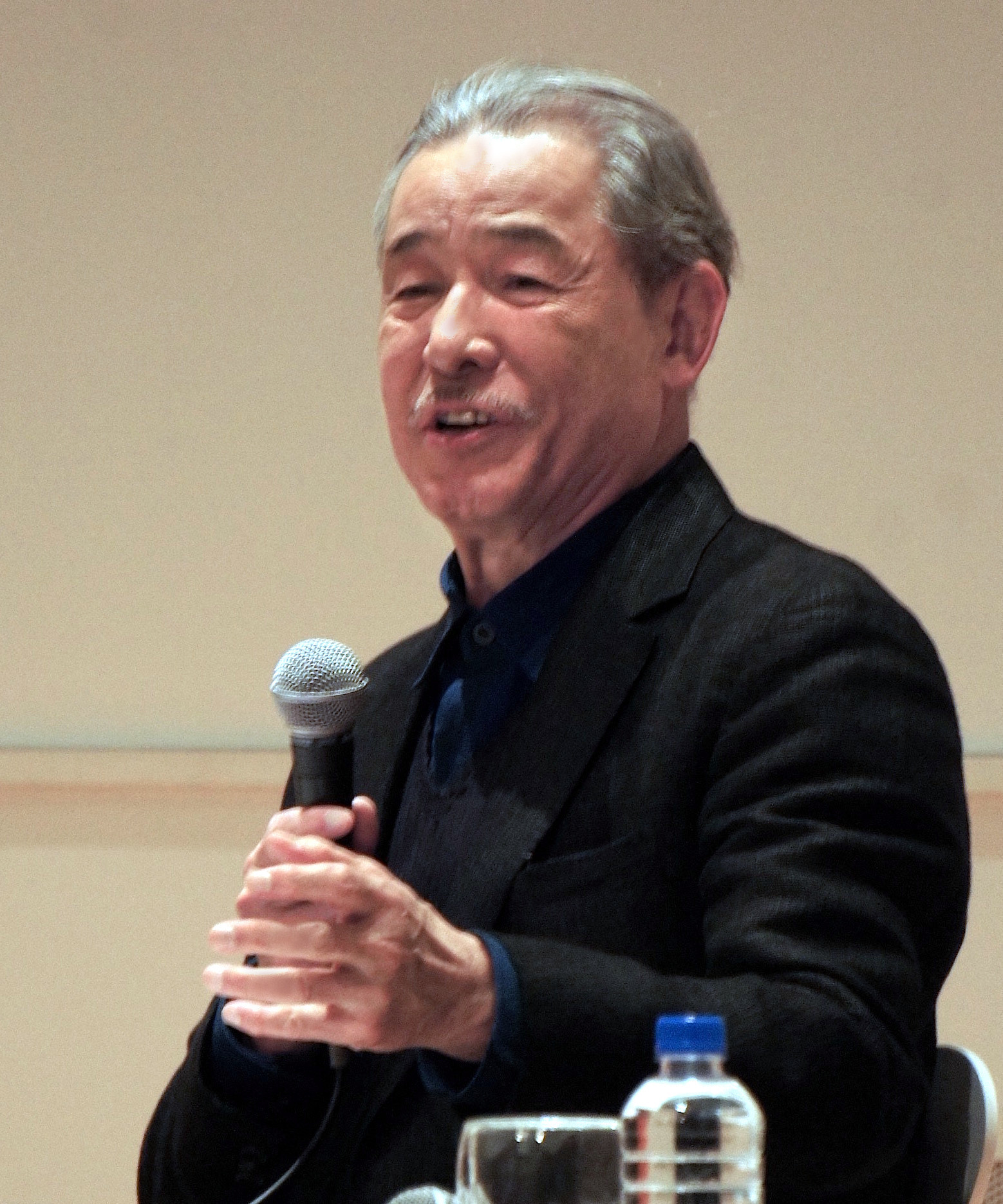
- 1938 (MCMXXXVIII)
- 2022 (MMXXII)
- Japanese
- Guy Laroche, Givenchy, Issey Miyake
- •Pleats Please (1993)
- •A-POC (1999)
- •Bao Bao bag
- •Technology in textiles
Issey Miyake
The Hiroshima survivor who treated clothing as an engineering problem, and designed the black mock-turtleneck Steve Jobs wore for thirteen years.
Issey Miyake was seven years old when the atomic bomb exploded over Hiroshima, three kilometres from his school. His mother died of radiation poisoning three years later. He almost never spoke of this. In a rare 2009 New York Times op-ed, he explained that he refused to be defined by the bomb — but that his preference for the constructive, the optimistic, and the technologically ambitious was deliberate.
He studied graphic design at Tama Art University, moved to Paris in 1965, apprenticed at Guy Laroche and Givenchy, worked at Geoffrey Beene in New York, and returned to Tokyo in 1970 to establish the Miyake Design Studio.
Pleats Please
Miyake's long investigation of pleating produced, in 1988, a commercially transformative discovery. He had developed a process by which polyester jersey could be cut, assembled, and then heat-pleated, yielding a garment that was structurally simple, light, machine-washable, and mechanically re-formable. Pleats Please, launched in 1993, became the most-worn piece of luxury minimalism of the late 1990s. Steve Jobs wore the Miyake black mock-turtleneck daily from 1998 until his death. Miyake had designed it, originally, for the Sony factory workforce.
I'm never really interested in fashion. I'm interested in making something new and perhaps new ways of wearing clothes. — Issey Miyake
A-POC
The A-POC (A Piece of Cloth) collection, launched in 1999, proposed a garment the wearer could cut to fit. A single tube of industrial-knit fabric, printed with the pattern of several possible garments, allowed a customer to pull out a dress, a top, a skirt, a pair of socks. It anticipated, by fifteen years, the 3D-printing and algorithmic-pattern discussions of the 2010s.
Death and Archive
Miyake died of liver cancer on 5 August 2022, in Tokyo, at eighty-four. His will directed that no retrospective be held and that his personal papers be sealed for thirty years. The studio has continued to release collections in his idiom. The Bao Bao bag, a geometric assemblage of triangular tiles, has been one of the best-selling luxury handbags worldwide since its 2010 launch. His legacy, structurally, is that he understood clothing as an engineering problem, and that engineering problems can be solved elegantly.
Related Dispatches

Streetwear: How a New York Skate Shop Conquered Paris Fashion
A graphic tee from Lafayette Street, a hoodie from Harajuku, a sneaker drop announced on Instagram. The forty-year migration of skate-and-hip-hop dressing from subculture to luxury runway.

Minimalism: Why 1990s Restraint Still Defines Luxury Today
A bias-cut slip in undyed silk, a sleeveless shift in undyed wool, a bag with no logo at all. The decade that decided that subtraction was a luxury proposition — and was right.
Grunge: The Collection That Got Marc Jacobs Fired in 1992
A flannel shirt from a thrift shop, a slip dress over a Tee, a pair of Doc Martens. The Seattle-imported anti-glamour that ended one designer’s job at Perry Ellis and reordered fashion for a decade.