
- 1922 (MCMXXII)
- 2020 (MMXX)
- Italian-French
- Dior, Paquin, Schiaparelli, Pierre Cardin
- •Space Age collection (1964)
- •The bubble dress (1954)
- •Unisex clothing
- •Licensing pioneer
- •Vinyl and geometry
Pierre Cardin
The tailor’s son from Venice who dressed the 1960s in vinyl and geometry, and then sold his name to 800 products in 94 countries.
Pierre Cardin's life was, in the second half, a commercial experiment as radical as his design work of the first half. By his death in 2020, the name Pierre Cardin was licensed to some eight hundred products in ninety-four countries. What tends to be forgotten is that the man who licensed so recklessly was, in 1964, the most radical silhouette-maker in Paris.
He was born Pietro Cardin in 1922 in the Veneto, the youngest of eleven children in a family ruined by the First World War. They fled fascism and settled in Saint-Étienne. He apprenticed to a tailor at fourteen, moved to Paris in 1945, and took positions at Paquin, Schiaparelli, and Dior — where, as chief tailor, he worked on the 1947 Bar suit. He opened his own house in 1950 at twenty-eight.
The Sixties
His 1954 bubble dress prefigured the 1958 baby-doll. His 1964 Cosmocorps collection — often called simply Space Age — was the most influential proposition of the decade: vinyl, metal, geometric cut-outs, unisex tunics, knee-high boots, helmets. The collection rejected couture's social premise; Cardin was making clothing for a population that was not, and never would be, at court.
I have always designed clothes for the world of tomorrow. — Pierre Cardin
Licensing
In 1959 Cardin licensed his name to a Parisian department store for a ready-to-wear line. The Chambre Syndicale expelled him, then reinstated him. Every subsequent couturier's ready-to-wear programme — from YSL's Rive Gauche to contemporary Dior — runs along the rails Cardin laid in 1959.
Property
Cardin accumulated real estate on a scale unmatched by any couturier. He owned the Palais Bulles on the Côte d'Azur, the Maxim's restaurant chain, and, at his death, some 1,800 pieces of property worldwide. He was the first Western designer to show in Communist China (Beijing, 1979) and in the Soviet Union (Moscow, 1991). Each tour opened a market he subsequently licensed.
He died in December 2020 at ninety-eight. His estate, valued at some €200 million, was contested by forty-six claimants. The retrospectives balanced exactly between admiration for the 1964 collection and distaste for the 2020 licence list. Both are accurate.
Related Dispatches

Mod: How British Teenagers Killed Parisian Fashion in the 1960s
Carnaby Street, the Vespa, a geometric mini, a bob cut to the jawline. The youth-culture uprising that, for the first time in fashion history, dictated the terms to Paris.
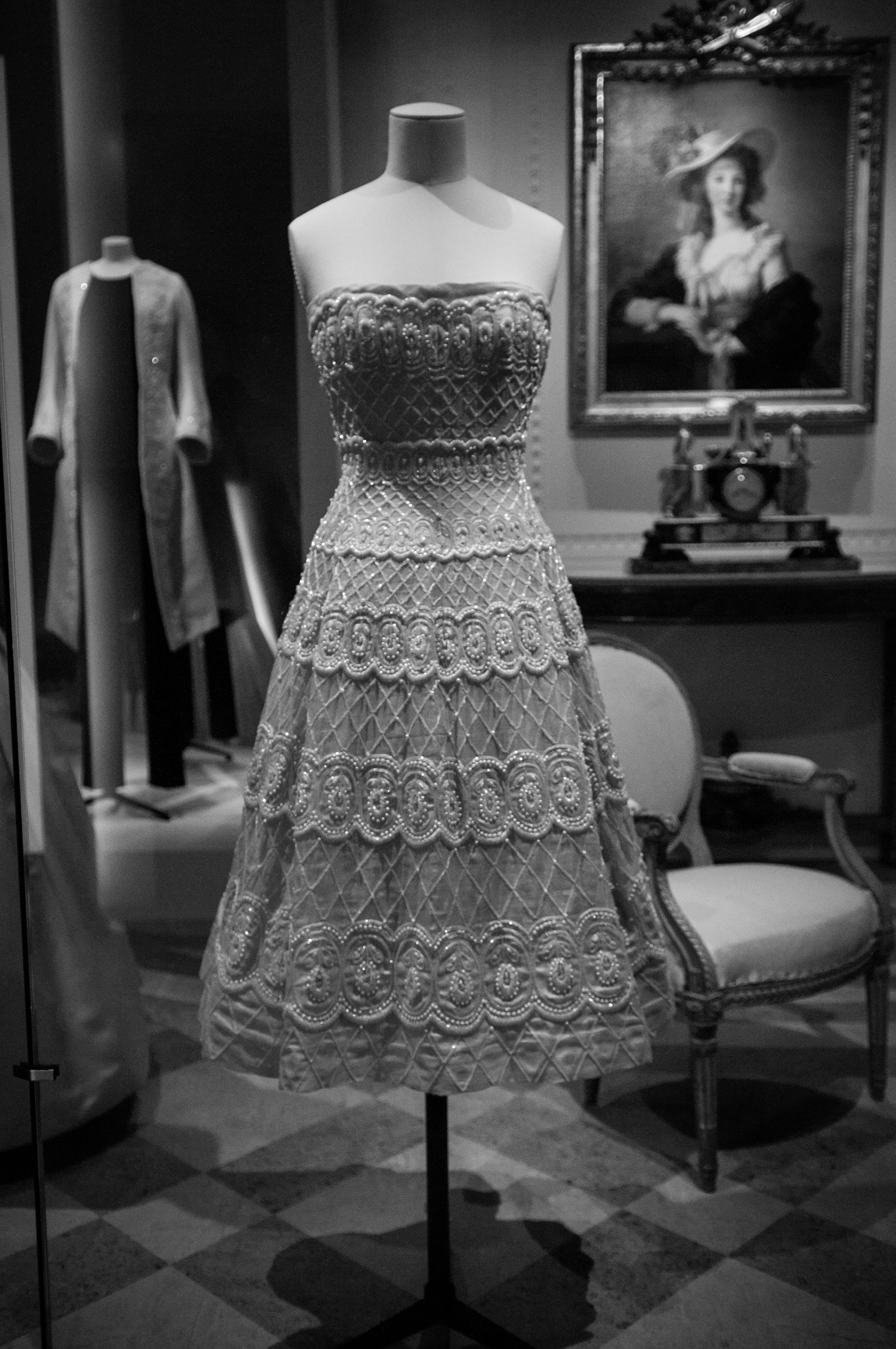
The New Look: Why Women Rioted Over a Dress in 1947
Christian Dior’s February 1947 collection used twenty yards of fabric per skirt at a moment when British women were rationed to two. The reaction was adoration, fury, and an industry rebuilt overnight.
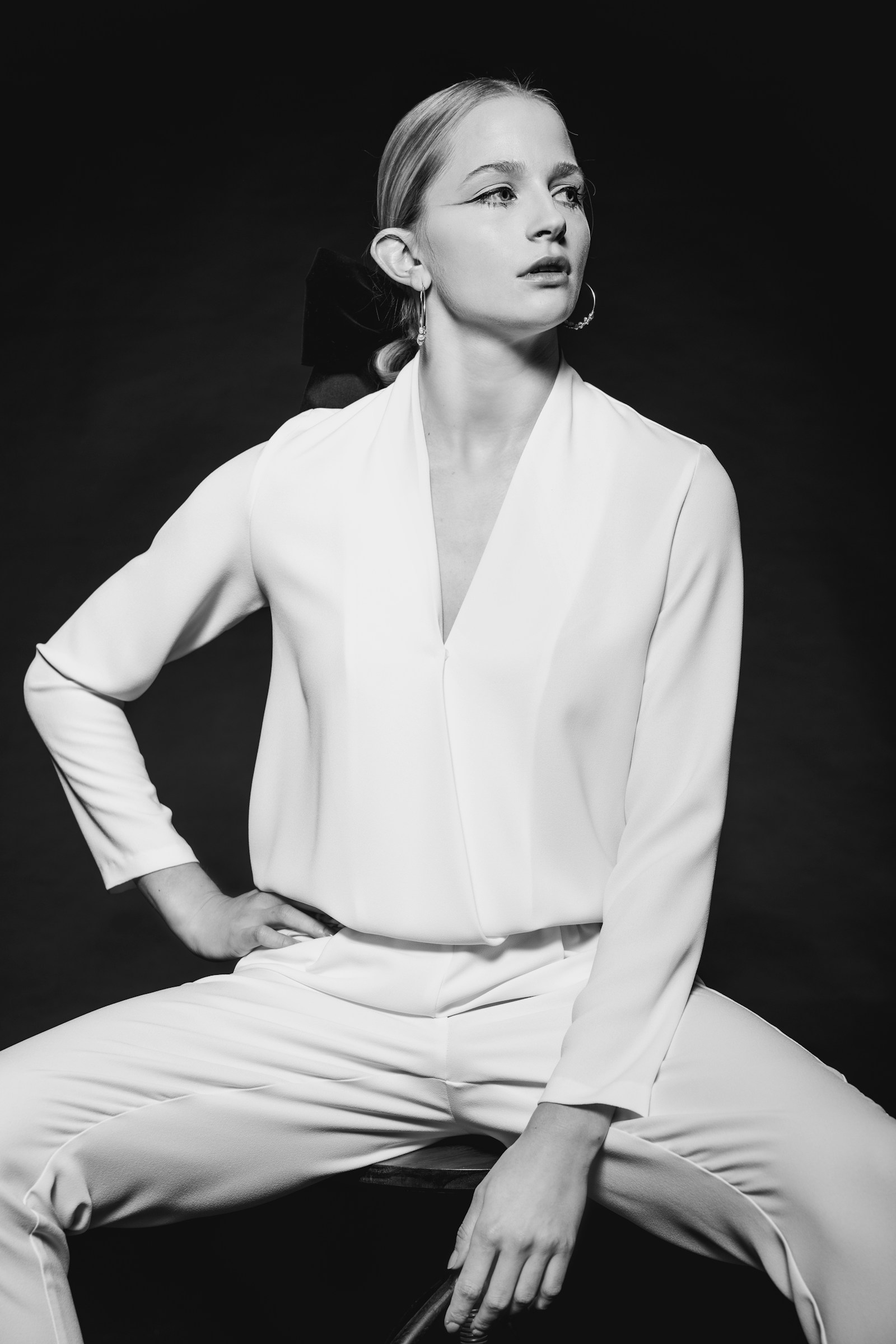
Le Smoking: Yves Saint Laurent Dresses Women in Tuxedos
In August of 1966, an evening tuxedo appeared on a Paris runway. The model was a woman. The century shifted, quietly, on its heel.