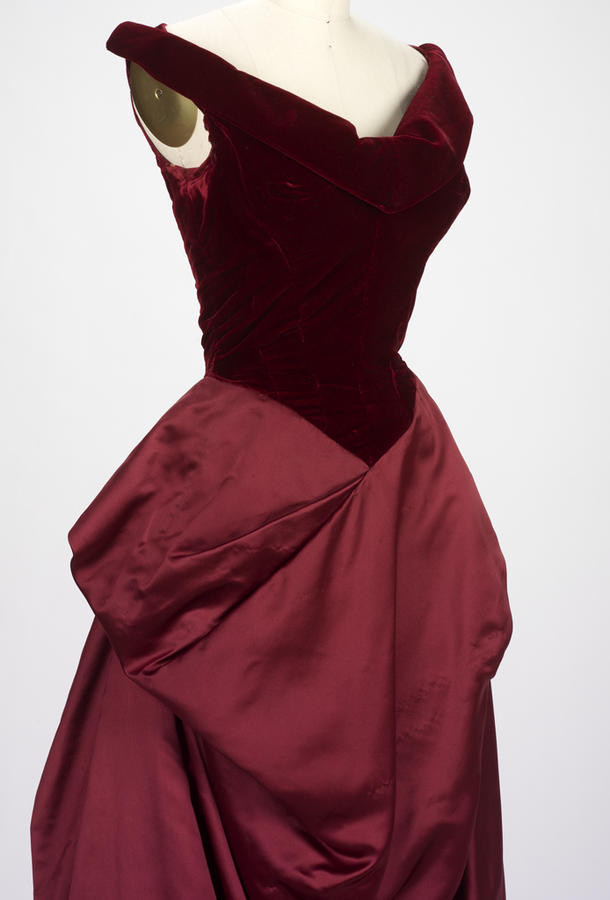
- 1906 (MCMVI)
- 1978 (MCMLXXVIII)
- British-American
- Charles James
- •The Clover Leaf ball gown (1953)
- •The Butterfly gown
- •Sculptural construction
- •"America’s first couturier"
Charles James
The difficult genius who, from a suite at the Chelsea Hotel, engineered the most sculpturally ambitious ball gowns of the twentieth century — and went bankrupt three times.
Charles James was born in Sandhurst, England, in 1906, to a British colonel and an American mother, and raised between the two countries. He opened his first millinery shop in Chicago in 1926, at twenty, under the name Charles Boucheron. He moved to London in 1929, opened as a dressmaker in Paris in the early 1930s, and settled finally in New York in 1940. He never operated a stable house; he worked, over his career, from a succession of rented rooms, culminating in a two-decade residency at the Chelsea Hotel.
The Method
James treated dressmaking as an engineering problem. He would work on a single ball-gown design for a year or more, producing hundreds of toiles, computing stress points, and weighing hems to correct the drape. His Clover Leaf ball gown of 1953 — a four-petal skirt weighing nine pounds, with an internal construction of buckram, taffeta, silk shantung, and nylon tulle — was so mathematically ambitious that the pattern drawing fills two archival boxes.
It is a question of harmony between proportions, weights, colours, and the fall of the fabric. — Charles James
The Reputation
His clients included Mrs. William Randolph Hearst, Babe Paley, Doris Duke, Gypsy Rose Lee, and Austine Hearst. Christian Dior, who visited James's studio on his first New York trip, credited James with "inspiring" the New Look silhouette, and purchased four James gowns as reference pieces. The generosity was unusual: James refused, systematically, to share patterns.
The Bankruptcies
James went bankrupt in 1958 and again in 1964. He was an impossible employer — firing and rehiring the same seamstresses multiple times — and an impossible businessman — he would spend eighty hours on a dress for which he had contracted to receive $800. He lived his final decades at the Chelsea Hotel, impecunious and unwell, obsessively cataloguing the papers and patterns of his 1940s and 1950s work.
He died at the Chelsea in 1978. The 2014 Metropolitan Museum of Art retrospective Charles James: Beyond Fashion displayed his ball gowns alongside their pattern drawings and stress diagrams; the exhibition drew 505,000 visitors.
Related Dispatches

Mod: How British Teenagers Killed Parisian Fashion in the 1960s
Carnaby Street, the Vespa, a geometric mini, a bob cut to the jawline. The youth-culture uprising that, for the first time in fashion history, dictated the terms to Paris.
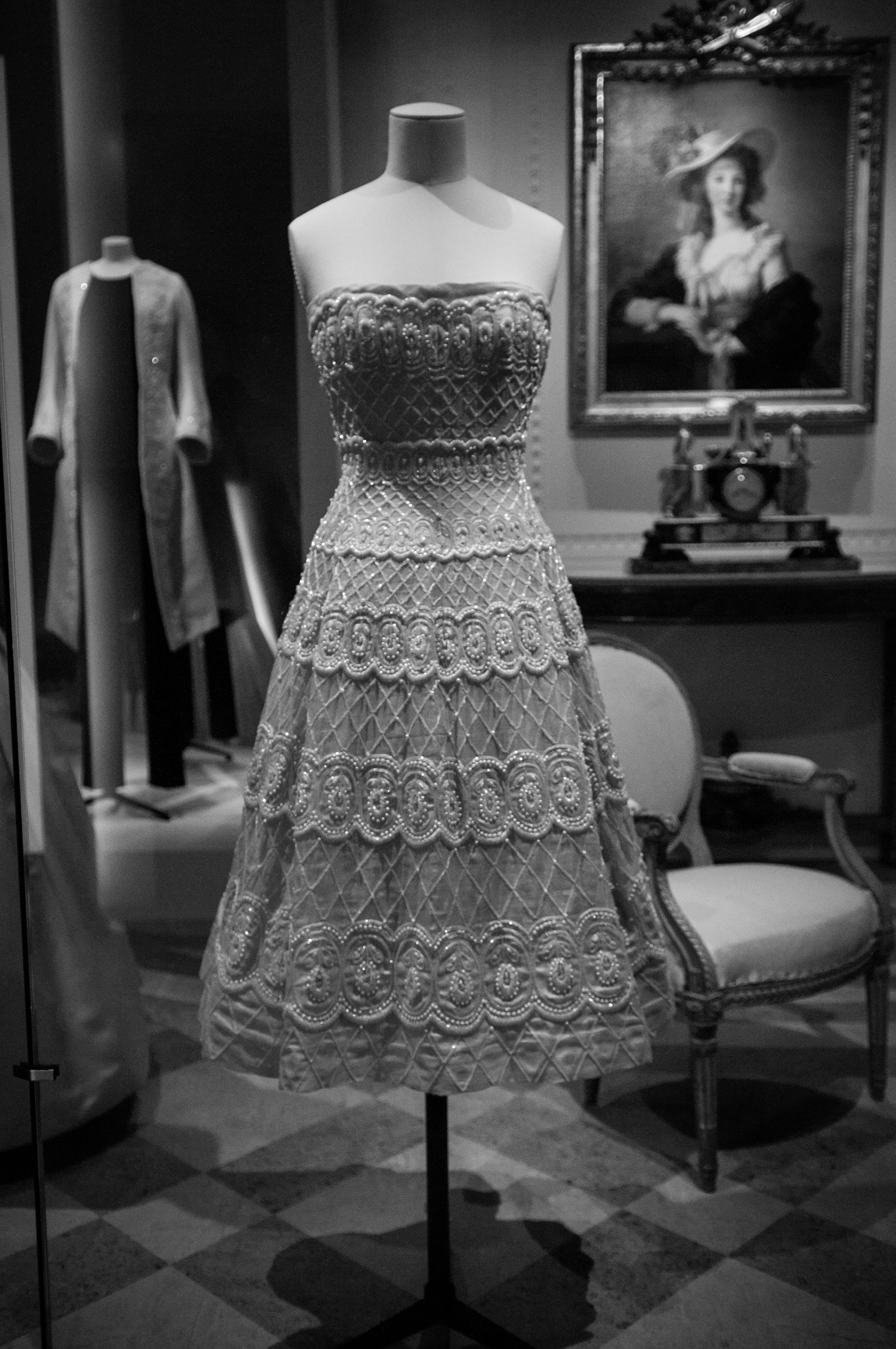
The New Look: Why Women Rioted Over a Dress in 1947
Christian Dior’s February 1947 collection used twenty yards of fabric per skirt at a moment when British women were rationed to two. The reaction was adoration, fury, and an industry rebuilt overnight.

Le Smoking: Yves Saint Laurent Dresses Women in Tuxedos
In August of 1966, an evening tuxedo appeared on a Paris runway. The model was a woman. The century shifted, quietly, on its heel.